Our Top Courses
IELTS Preparation Course
(0 Reviews)
Original price was: 20,000.00৳ .Current price is: 15,000.00৳ .
English Foundation Program
(1 Reviews)
10,500.00৳ 
PTE Academic Online Course
(0 Reviews)
Original price was: 10,000.00৳ .Current price is: 7,000.00৳ .
Beginner’s Programming for Juniors
(0 Reviews)
24,000.00৳ 

Shopping cart

IELTS Writing Recent Questions

BAR CHART

WRITING TASK 1

You should spend more about 20 minutes on this task.

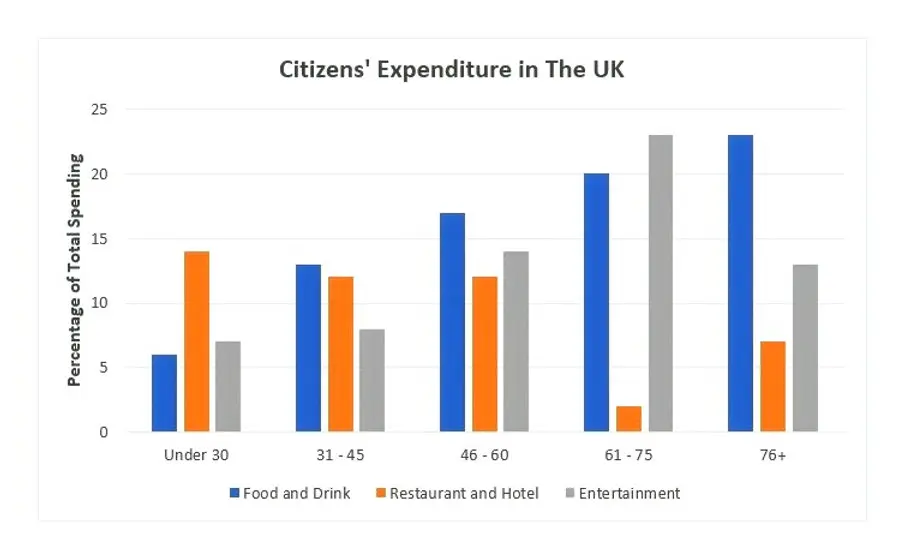
1.The chart below shows the expenditure on three categories among different age groups of residents in the UK in 2004. Summarise the information by selecting and reporting the main features, and make comparisons where relevant.
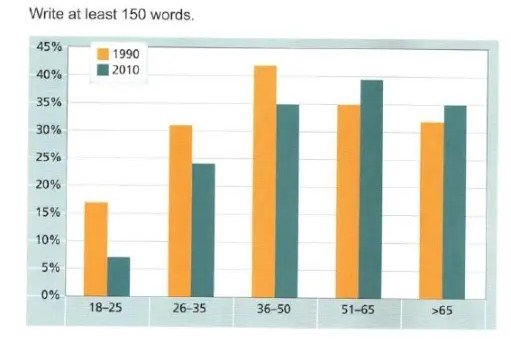
2.The chart below gives information on the percentage of British poeple giving money to charity by age range for the years 1990 and 2010. Summarise the information by selecting and reporting the main features and make comparisons where relevant.
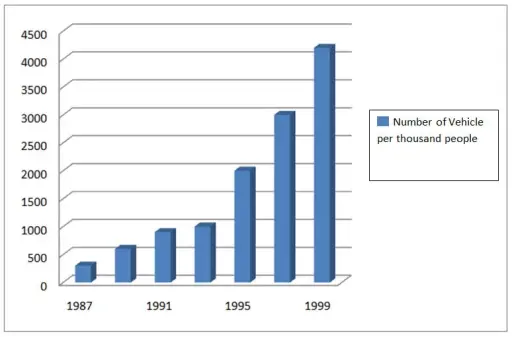
3. The bar chart compares the total number of vehicles per one thousand people in China who owns a car in the years 1987 to 1999.
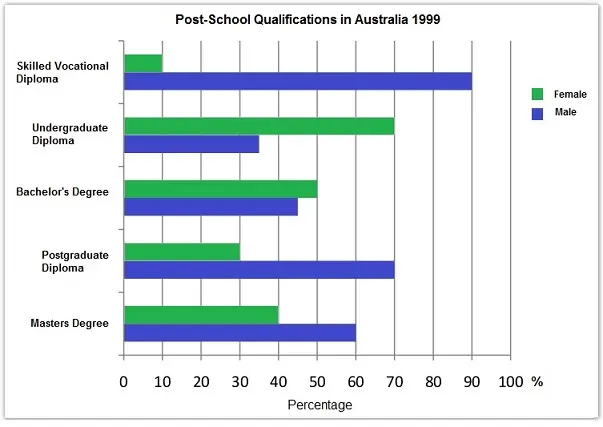
4. The chart below shows the different levels of post-school qualifications in Australia and the proportion of men and women who held them in 1999. Summarise the information by selecting and reporting the main features and make comparisons where relevant.
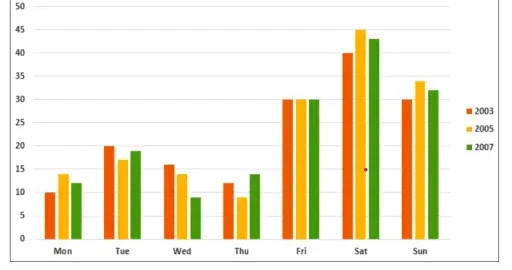
5. The graph below shows the percentage of people going to cinemas in one European country on different days. Summerize the information by selecting and reporting the main features, and make comparisons where relevant.


LINE CHART

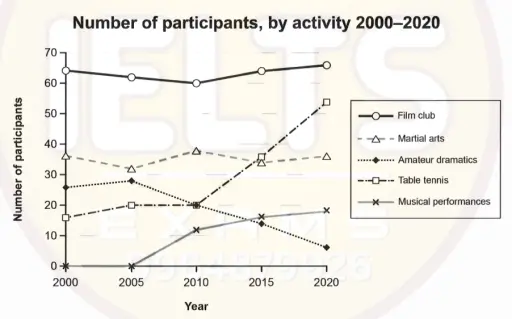
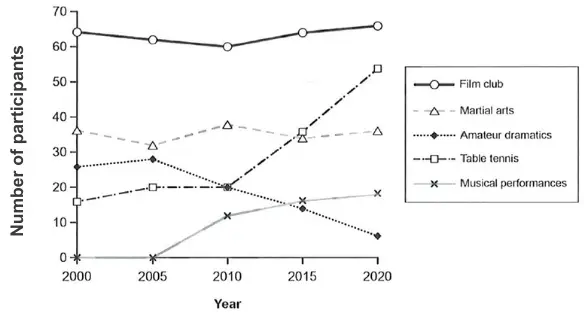
1. The line chart depicts the data of total participants for 5 distinct activities at a Melbourne social centre, in Australia between 2000 to 2020. Overall, those 5 different activities at a Melbourne social centre had their own patterns throughout the period.
2. You should spend about 20 minutes on this task.
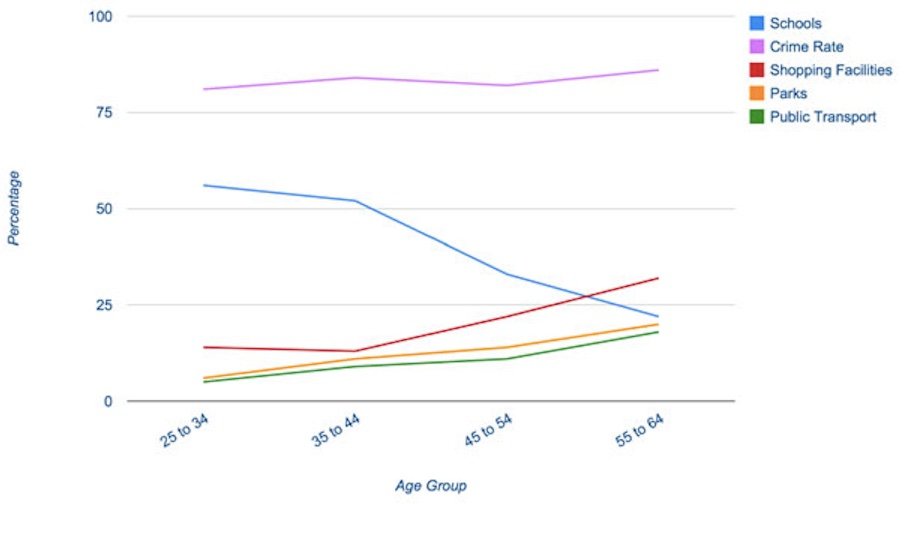
The line graph shows the percentage of people of different age groups and how they rate a set of factors in terms of importance when buying a new home.
Summarise the information by selecting and reporting the main features and make comparisons where relevant.
Write at least 150 words.
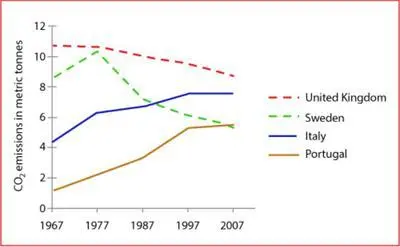
3. The graph below shows average carbon dioxide (C02) emissions per person in the United Kingdom, Sweden, Italy and Portugal between 1967 and 2007. Summarise the Information by selecting and reporting the main features, and make comparisons where relevant.
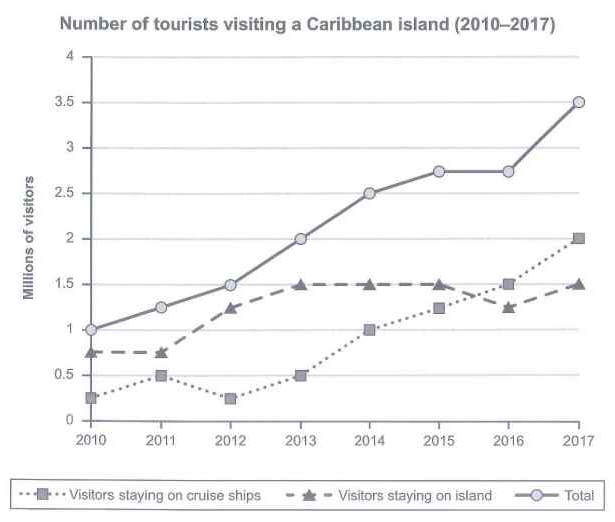
4. The graph below shows the number of tourists visiting a particular Caribben Island between 2010 – 2017.

Summarise the information by selecting and reporting the main features and make comparisons where relevent 

write at least 150 words.
6. The graph below gives information on the numbers of participants for different activities at one social center in Melbourme, Australia for the period 2000 – 2020.

Summarise the information by selecting and reporting the main features and make comparisons where relevent 

write at least 150 words.


PIE CHART

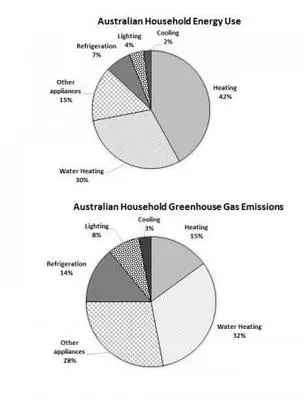
1. The first chart below shows how energy is used in an average Australian household. The second chart shows the greenhouse gas emissions which result from this enegy use.
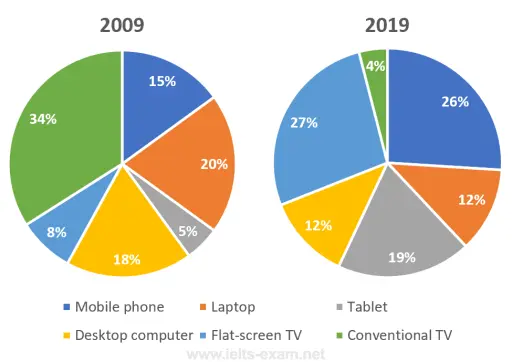
2. The pie charts below show the devices people in the 18 to 25 age group use to watch television in Canada in two different years. Summarise the information by selecting and reporting the main features, and make comparisons where relevant.
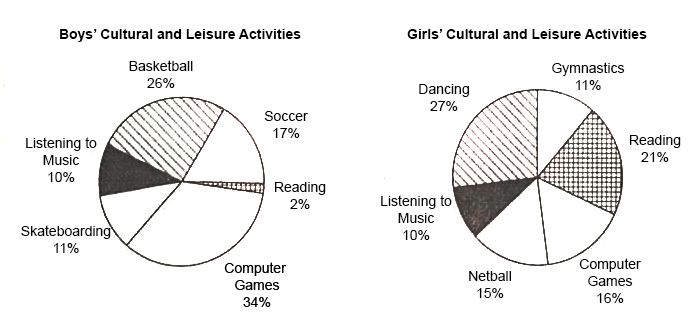
3. The pie graphs below show the result of a survey of children’s activities. The first graph shows the cultural and leisure activities that boys participate in, whereas the second graph shows the activities in which the girls participate.
Write a report describing the information shown in the two pie graphs.
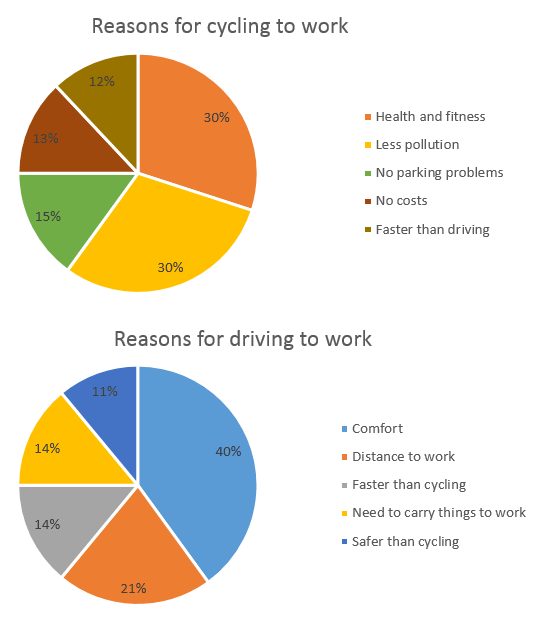
4. The charts below show the reasons why people travel to work by bicycle or by car.
Summarise the information by selecting and reporting the main features, and make comparisons where relevant.
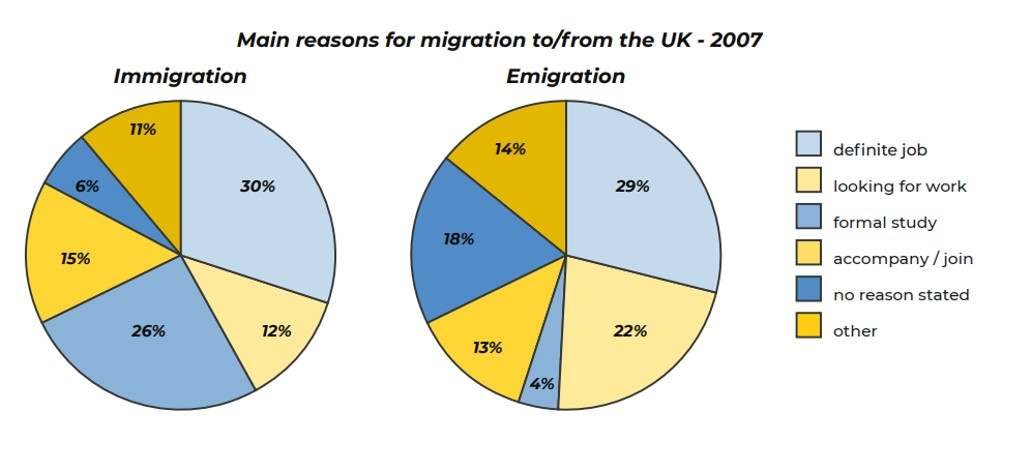
5. The two pie charts below show the main reasons for migration to / from the UK – 2007. Summarise the information by selecting and reporting the main features, and make comparisons where relevant.
 

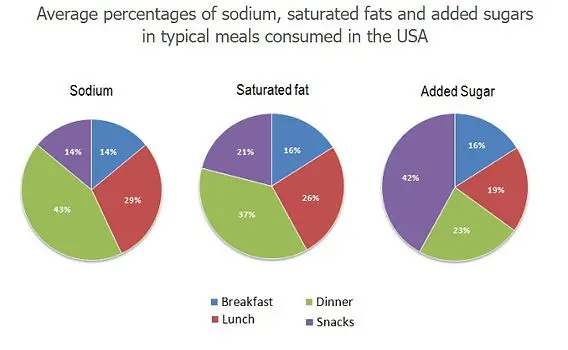
6. The three pie charts compare the composition of four different meals, namely breakfast, dinner, lunch and snacks, in terms of three nutrients, namely sodium, saturated fat and added sugar.
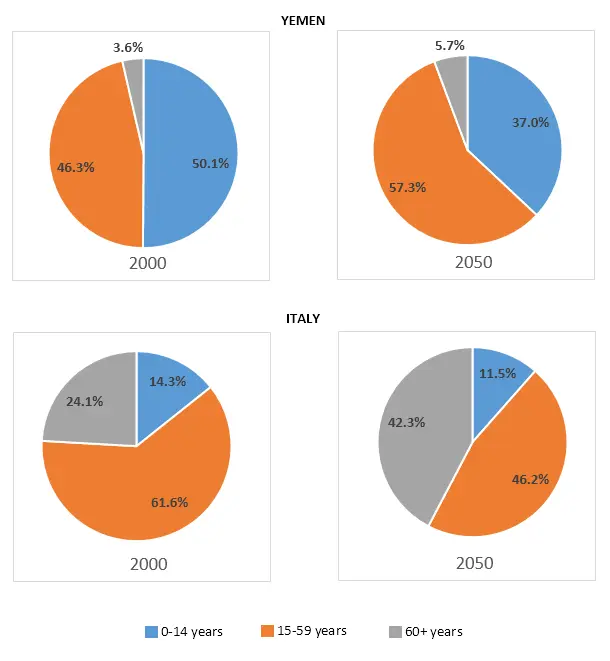
7. The charts below give information on the ages of the populations of Yemen and Italy in 2000 and projections for 2050. Summarise the information by selecting and reporting the main features, and make comparisons where relevant. YEMEN 2000 2050 e at lea 3.6% 5.7% 46.3% 50.1% 57.3% 37.0% 2000 24.1% ITALY 2050 14.3% 11.5% 42.3% 61.6% 46.2% 0-14 years 15-59 years 60+ years
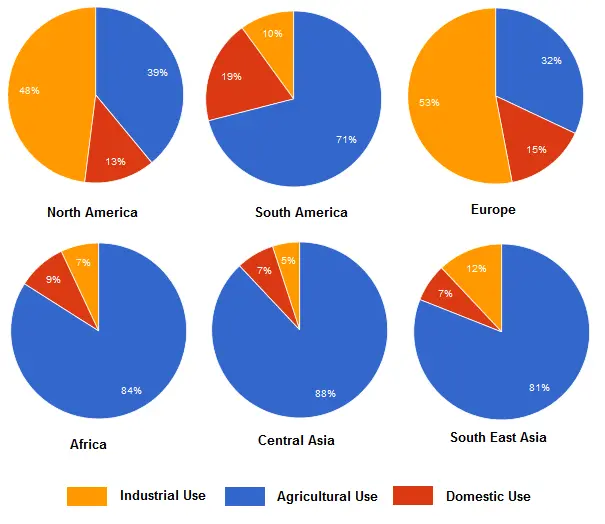
8. The charts below show the percentage of water used for different purposes in six areas of the word. Summarise the information by selecting and reporting the main feature and make comparisons relevant
TABLE

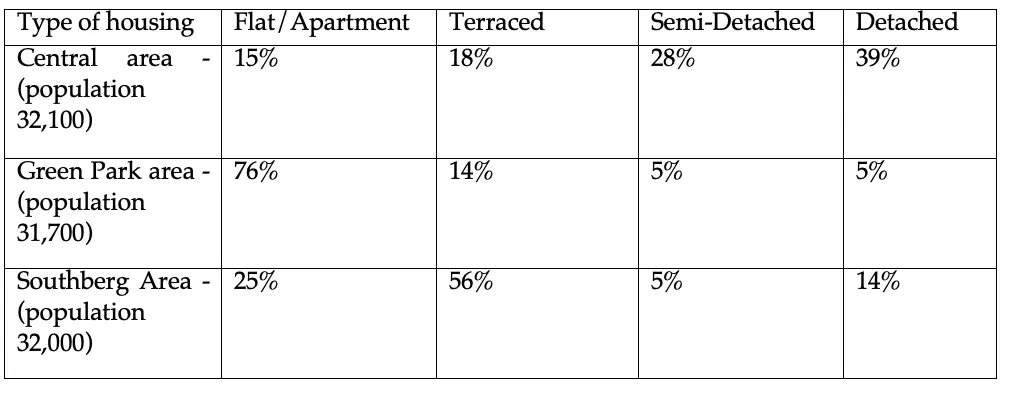
1. The table below shows the percentage of the population and the types of houses they live in 3 areas of a city. Summarise the information by selecting and reporting the main features and make comparisons where relevant.
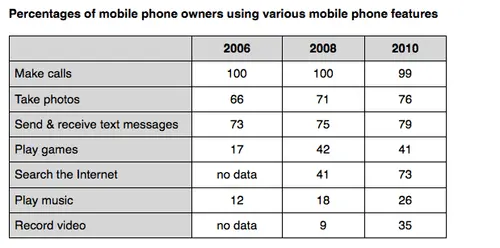
2. The table below shows the percentage of mobile phone owners using various mobile phone features. Write a report of at least 150 words, summarizing the information and making comparisons where relevant.
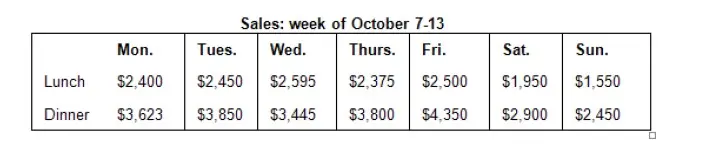
3. The table below shows the sales at a small restaurant in a downtown business district. Summarize the information by selecting and reporting the main features, and make comparisons where relevant.
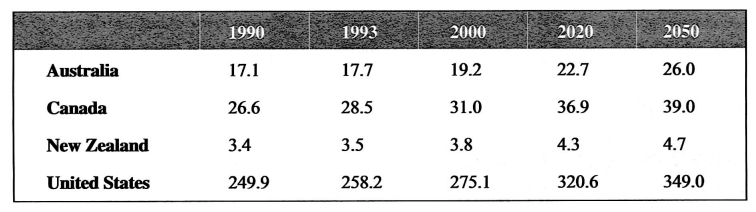
4. The table below gives information about past and projected population figures in various countries for different years. Summarise the information by selecting and reporting the main features, and make comparisons where relevant. Write at least 150 words.
 
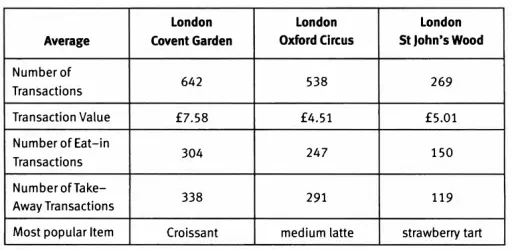
5. The table below gives information about a bakery’s average sales in three different branched in 2015. Summarise the information by selecting and reporting the main features, and make comparisons where relevant.


MAP

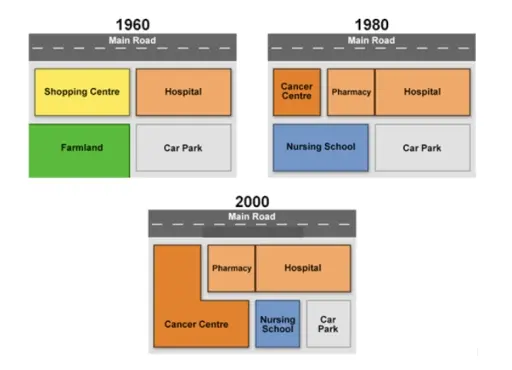
1. The maps below show the changes that have taken place at Queen Mary Hospital since its construction in 1960.
 
Summarise the information by selecting and reporting the main features and make comparisons where relevant.
 
 
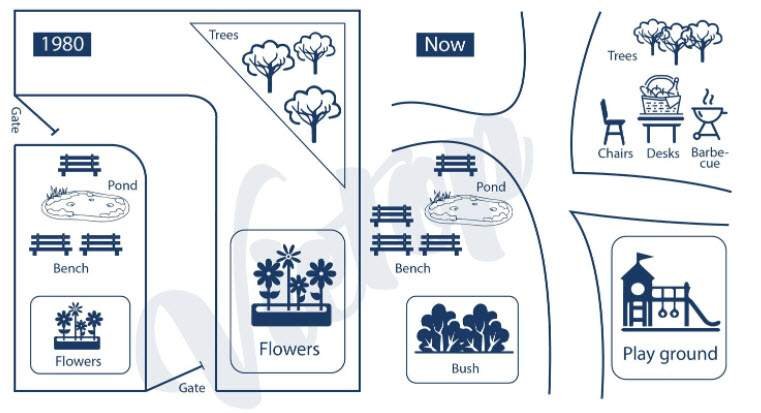
2. The map below describes changes to a park in 1980 and now.


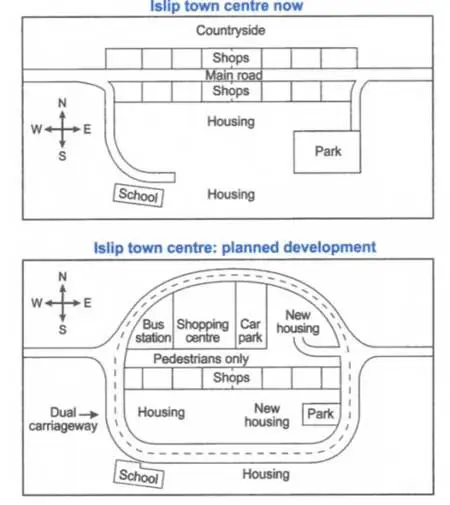
3. The maps below show the center of a small town called Islip as it is now, and plans for its development. 

Summarise the information by selecting and reporting the main features, and make comparisons where relevant.


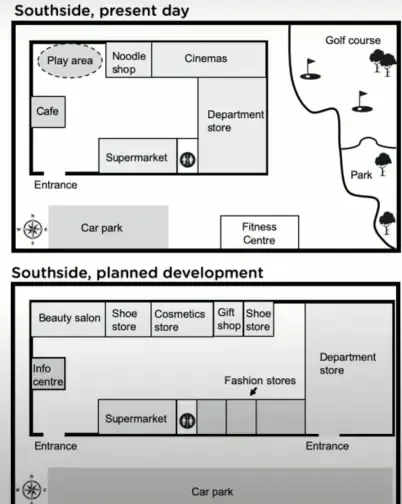
4. The maps show Southside, a shopping mall, as it is now, and plans for its development. 

Summarise the information by selecting and reporting the main features, and make comparisons where relevant.


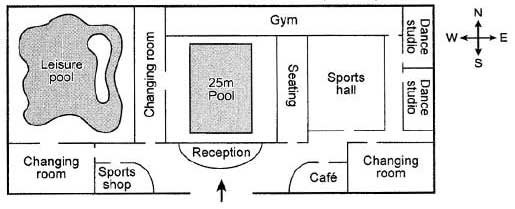
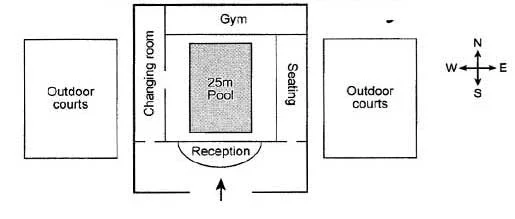
5.  The plans below show the layout of a university’s sports center now, and how it will look after redevelopment. 

Summarise the information by selecting and reporting the main features, and make comparisons where relevent. 


UNIVERSITY SPORTS CENTER (present)
UNIVERSITY SPORTS CENTER (future plans)


PROCESS DIAGRAM

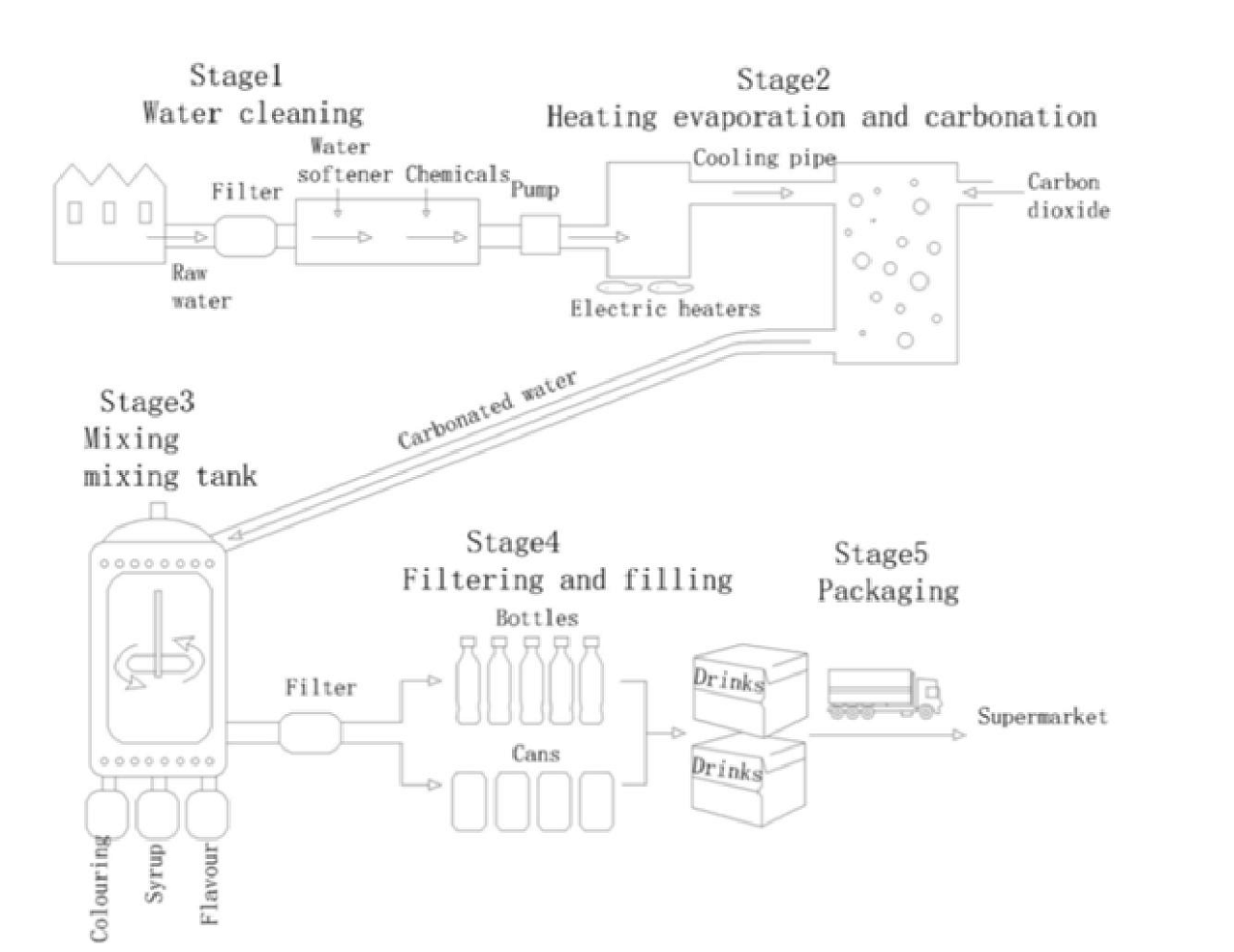
1. The diagram shows the process of making  drinking water 

Summarise the information by selecting and reporting the main features, and make comparisons where relevent. 

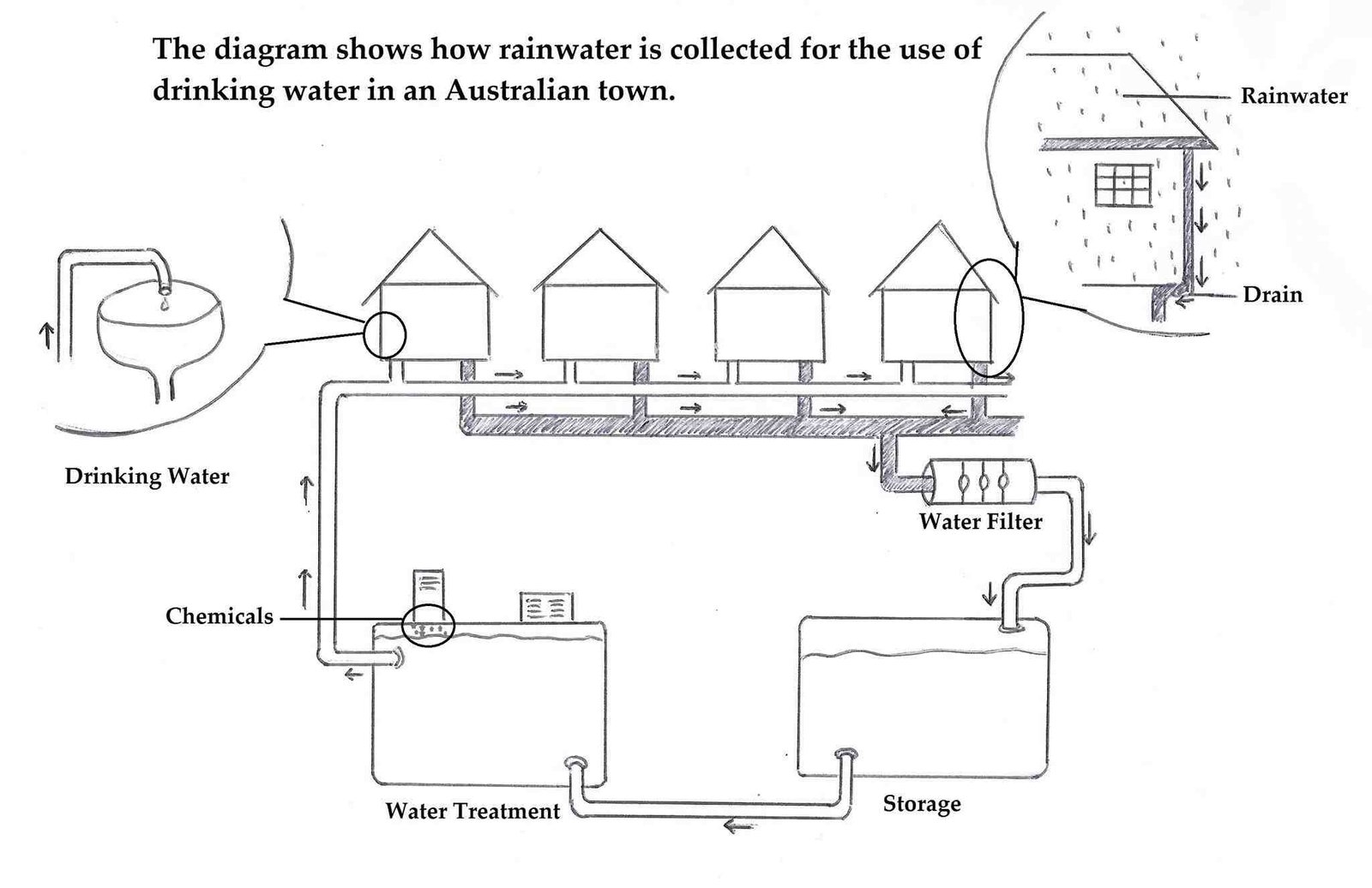
2. The diagram shows how rainwater is collected for the use of  drinking water in an Australian town. 

Summarise the information by selecting and reporting the main features, and make comparisons where relevent. 

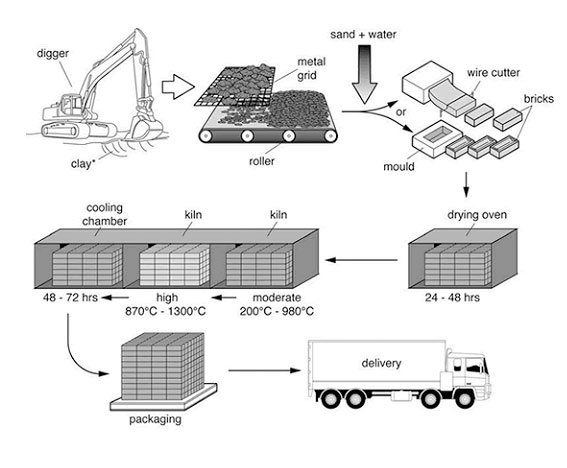
3. The diagram illustrates the process that is used to manufacture bricks for the building industry.

Summarise the information by selecting and reporting the main features and make comparisons where relevant.
Write at least 150 words.
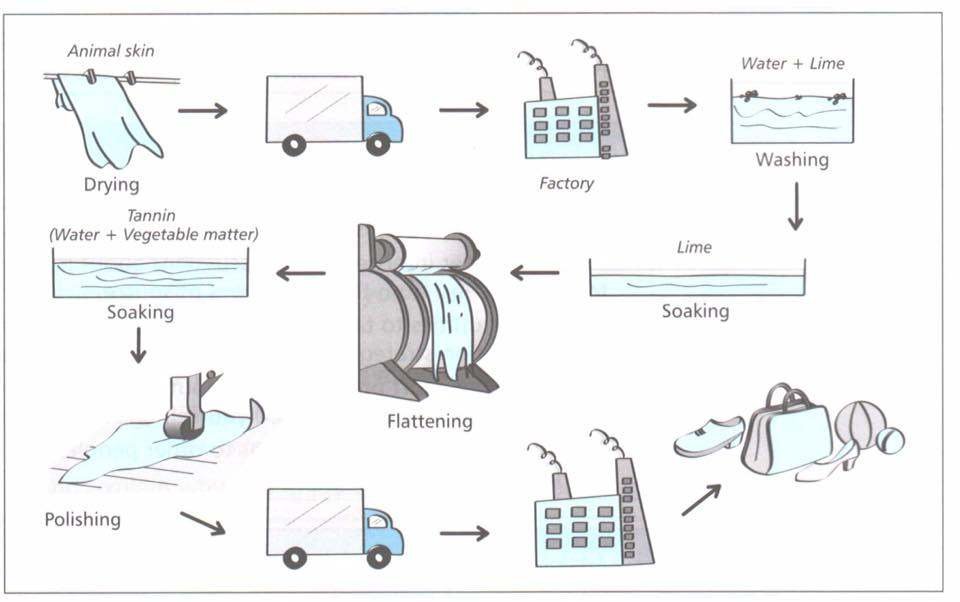
4.  The diagram shows the making process of lather products.

Summarise the information by selecting and reporting the main features, and make comparisons where relevent. 
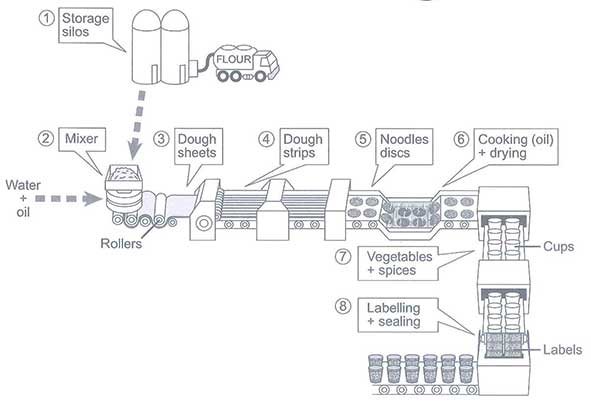
5. The diagram below shows how instant noodles are manufactured .

Summarise the information by selecting and reporting the main features and make comparisons where relevant.

WRITING TASK 2

Agree/Disagree

  1. People should keep all the money they earn and should not pay tax to the state. To what extent  do you agree or disagree?
  2. Interview is not a reliable method of recruitment. To what extent do you agree or disagree?
  3. Work from home can benefit only employees, not employers. To what extent do you agree or disagree?
  4. Is money the only motivating factor at work? To what extent do you agree or disagree with the statement?
  5. The best way to learn other cultures is to work in multinational organizations. Do you agree or disagree?
  6. Long average working hours are good for economic success, but have negative social consequences. Do you Agree or Disagree?
  7. If people had a choice between working and not working, they would choose not to work. To what extent do you agree or disagree?
  8. Social skills are as important as academic qualifications. Do you Agree or Disagree?
  9. Doctors, nurses and teachers should be paid more than sports and entertainment celebs.  Do you agree or disagree?
  10.  There should be a quota for women in high level jobs.  Do you Agree or Disagree?
  11.  A lot of people in college are doing academic study. We should encourage them to do vocational skills (like plumbers and electricians). Do you Agree or Disagree? 
  12.  Distance-learning programs cannot bring the benefit of attending college or university. Do you Agree or Disagree?
  13.  The government should fund sport and art for school students, rather than professional sports, arts events. Do you Agree or Disagree? 
  14.  Once children start school, teachers have more influence than parents on their development. Do you Agree or Disagree?
  15.  News media nowadays have influenced people’s lives negatively. Do you Agree or Disagree?
  16.  Air travel should be restricted because of pollution and the use of the world’s fuel. To what extent do you agree or disagree? 
  17.  Good relationships between different countries are becoming more important to solve global problems. Do you agree or disagree?
  18.  Students today get information online, so libraries are not necessary. To what extent do you agree or disagree?
  19.  Celebrities should accept the media publicizing their private lives as part of their fame. Do you agree or disagree?
  20.  Governments should reduce environmental pollution and housing problems to prevent illness and disease. To what extent do you agree or disagree?


Discuss both views

  1.  Some people believe that time spent on television and computer games can be valuable for children. Others believe this has negative effects on a child. Discuss both views and give your own opinion.
  2.  Some people say that the experiences a child has before starting school have the most influence on their future life. Others say that experiences as a teenager, especially at school, are more influential. Discuss both views and give your own opinion?
  3.  Eating too much sugar is harmful for our health. Some people think that it is the government responsibility to limit the amount of sugar they eat. Discuss both views and give your own opinion.
  4.  Some people say that the governments should pay for health care and education but others think that this is not the government’s responsibility. Discuss both these views and give your opinion.
  5.  Some people think that the individuals who make the most money are the most successful. Others believe that the most successful are those who contribute to society, such as scientists and teachers. Discuss both perspectives and give your opinion?
  6.  Nowadays larger distances are travelled by people to work and study on a daily basis. Some consider it to be a negative development while others disagree. Discuss both views and give your own opinion.
  7.  Some people think city planners should create more green spaces and plant trees. Others believe that they should focus on building new houses. Discuss both views and give your opinion.
  8.  Some people argue that competitive sports are good for bringing together people from different cultures. Others argue that these sports can cause problems and increase conflicts between nations. Discuss both views and give your opinion.
  9.  Some think that residents should be responsible for keeping their areas clean and tidy, while others say it is the government’s responsibility. Discuss both views and give your opinion.
  10.  Some people think that it is best to save money, for example in a bank or savings scheme. Other people feel that money should be spent whenever it is available. Discuss these views and reach an opinion on this debate.
  11.  To be successful, one needs a university education, whereas others say it is not true. Discuss both views.
  12.  Some say history has nothing or little to tell us, others think that it can help us better understand the present. Discuss both views and give your opinion.
  13.  Charity organisations should only offer help to the poor of their own country while others believe these organisations should give aid to people who are in great need wherever they are. Discuss both views and give your opinion.
  14.  We need to give aid to all poor countries, whereas others claim that we should not provide help to the countries who have corruption in their system. Discuss both views.
  15.  Many people are afraid to leave their home because of crime. Some believe that more action can be taken to prevent crime, while others feel that little action can be done to stop crime. Discuss both views and give your opinion.
  16.  Certain people believe that the only way to reduce crime is sentencing criminals for longer time periods, while others believe that alternative methods should be used to lower crimes. Discuss both views and give your opinion.
  17.  Some people argue that the public should be allowed to have guns. However, others do not agree with it. Discuss both views and give your opinion.
  18.  The number of TV programmes is growing day by day. Some people say that it is good as it gives people more choices, while others say it affects the quality of TV programs. Discuss both views and give your opinion..
  19.  In some countries, TV programs are transmitted throughout the day and night. Some people think that 24 hour transmission has positive impacts, while others believe it is negative. Discuss both views and give your opinion.
  20.  Some people think that violent films and videogames have negative effects on people and should be banned. Others think that they are just relaxation sources. Discuss both views and give your opinion.


Double question/ Positive or Negative development

  1.  In many parts of the world, children are given more freedom than in the past. Is this a positive or negative development?
  2.   People are surrounded by advertising, which has an increasing effect on our lives. Do you think the positive effects of this outweigh the negative effects?
  3.   In some countries, fast food restaurants and supermarkets give money to schools to promote their products. Do you think this is a positive or negative development? 
  4.   Newspapers have influenced people’s ideas and opinions. What are the reasons for this? Is this a positive or a negative development?
  5.   Differences between countries are barely evident these days. Everyone in the world is wearing the same brands and watching the same TV channels and movies. Do you think it is a positive or a negative development?
  6.  Fewer and fewer people today write by hand using a pen, pencil or brush. What are the reasons? Is this a positive or negative development?
  7.   In some parts of the world, it is becoming increasingly popular to try to find out about the history of your family. Why do people do this? Is this a negative or positive development?
  8.   News media is important in our society. Why is it so important? Do you think its influence is generally positive or negative?
  9.  Due to developments in science and technology, lifestyles of people across the world are becoming more and more similar to each other. Do you think this is a positive or o negative development?
  10.   In many countries, more and more people are competing for a place to study in universities. Why does this happen? Do you think this is a positive or negative development?
  11.   In some cities, the government has tried to reduce traffic. For instance, they imposed a congestion tax during rush hours. Do you think this development is positive or negative?
  12.   In recent years, the family has changed as well as family rules. Why is  this happening and is this situation positive or negative?
  13.   Nowadays young people are  admiring media and sports stars, even though they do not set a good example. Do you think this is a positive or a negative development?
  14.   In some cities people are choosing cars instead of bicycles, while in other cities riding bikes is replacing cars. Why is this the case? Which development do you think is better?
  15.    More and more children from wealthy countries are doing unpaid work in poor counties, such as teaching, building houses etcetera. Why are they doing this? Who gets more benefit, the community or the young people?
  16.  Today, many children spend a lot of time playing computer games and less time on sports. Why is this the case? Is it a positive or a negative development?
  17. In many countries, the government spends a large amount of money on improving internal access. Why is it happening? Do you think it is the most appropriate use of government money?
  18.  Fossil fuels (cool, oil, natural gas) are the main sources in many countries, but in some countries the use of alternative sources of energy (wind energy and solar energy) are encouraged. To what extent do you think it is a positive or negative?
  19. It has become easier and more affordable for people to travel to other countries. Do you think it is a positive or a negative development? Give your opinion and relevant examples from your experience. 
  20.  Nowadays, sport is becoming a business and more and more professionals and big companies are getting involved in sporting events. Do you think that it is a positive or a negative development?


  Advantages and Disadvantages

  1. Because of the global economy, many goods including what we use as daily basics produced by other countries have to be transported for a long distance. To what extent do the advantages outweigh the disadvantages?
  2. Now the machine is very complex, and a lot of difficult work is automated. Does this machine automation have more pros than cons?
  3.  People are encouraged to get rid of things in order to get the newest fashion and the latest technology. Do the disadvantages of a throwaway society outweigh the economic advantages?
  4. Some students take one year off between finishing school, and going to university, in order to travel or to work. Do you think advantages outweigh disadvantages? 
  5. Teachers think that international student exchange would be beneficial for all teenage school students. Do you think its advantages outweigh the disadvantages? 
  6. The food travels thousands of miles from form to consumer. Some people think it would be better for our environment and economy if people only eat locally produced food. To what extent do the advantages outweigh the disadvantages? 
  7.  It is suggested that all young adults should undertake a period of unpaid work, helping people in the community. Does it bring more benefits or drawbacks to young people?
  8. There are social, medical, and technical problems associated with the use of mobile phones. What forms do they take? Do you agree that the problems outweigh the benefits of mobile phones?
  9. As transport and accommodation problems are increasing in many cities, some governments are encouraging businesses to move to rural areas. Do you think the advantages outweigh disadvantages?
  10.  After completing high school, and before going to college or university, some students take a year off either to work or travel. What do you think is better, traveling or working? Discuss the advantages and disadvantages of both approaches. 
  11. In some countries, more and more adults are living with their parents after graduating from college, university, or even after finding a job. Do the advantages of this outweigh the disadvantages?
  12. Some people believe that teaching children at home is best for children’s development, while others think that it is important for children to go to school. Discuss the advantages of both methods and give your own opinion. 
  13. It is now possible for scientists and tourists to travel to remote natural environments such as the South Pole. Do you think the advantages outweigh the disadvantages? 
  14.  More and more people are using the internet to do their tasks rather than doing it in person. (e.g. banking, shopping, hotel booking etc. ). Do the advantages of this trend outweigh the disadvantages? 
  15.  In some cities, there are few controls on the design, construction of homes, office buildings, and the owners can decide on the styles of their houses. Do the advantages of this outweigh its drawbacks? 
  16. In many counties, women are allowed to take maternity leave during the first month after the birth of the newborn. Do you think the advantages outweigh the disadvantages?
  17. In some countries, university students live away from home and in another city while studying. Do you think the disadvantages outweigh the advantages of living in another city?
  18. It has been suggested that everyone in the world wants to own a car, a TV and a fridge. Do you think the disadvantages of such a development outweigh the development?
  19. Children are tough to push themselves to try and be better than their classmates, rather than work together for everyone’s benefit. Do you think the advantages outweigh its disadvantages?
  20. People can eat a wide variety of food from other regions. As a result they are eating a lot of foreign food instead of locally produced food. Do you think the advantages of eating foreign food are more than its harms?


 Cause and solution

  1. Many people believe that today there is a general increase in anti-social behavior and lack of respect for others. What might have caused this situation? How to improve it? 
  2. Some people believe that young people know about international pop and movie stars but know very less about famous people from the history of their own country. Why is this? How can more interest be created in young people to gain more knowledge about their own famous people from history?
  3. Environmental problems such as pollution and climatic variations are increasing nowadays. The governments have taken some measures at a global level. But they got only a few solutions. Why is it so? How can this problem be solved? 
  4.  The economic growth in developing and developed countries is making people richer. However, the research indicates that people in developing countries are happier than people in developed countries. What is your opinion on this?
  5. Some people think that universities should provide graduates with the knowledge and skills needed in the workplace in the future. Others think the true function of a university is to provide access to knowledge for its own sake.  What do you think are the main functions of a university?
  6.  International travel makes people prejudiced rather than broad-minded. What are its causes and what  measures can be taken to solve this problem?
  7.  The natural resources such as oil, and fresh water are being consumed at  an alarming rate. What problems does it cause? How can we solve these problems? 
  8.  People have to spend more and more time traveling from their homes for jobs and study. What are the reasons? How can we solve this problem? 
  9. Many people nowadays do not feel safe either when they are at home or when they go out. What are the reasons and what can be done to solve this problem?
  10.  In recent years, the number of crimes committed by teenagers in major cities throughout the world is increasing. Discuss this issue. Give reasons and suggest some solutions.
  11. Most countries believe that international tourism has harmful effects. Why do they think so? How to change their views?
  12.  In some countries around the world men and women are having children late in life. What are the reasons for this development? What are the effects on society and family life?
  13.  In some countries the number of people using bikes as the main transport mode is decreasing, even though it is so beneficial. Why is this so? How can people be encouraged to use more bicycles?
  14.  All over the world, people watch foreign films much more than locally produced films. Why? Should the government provide financial support to local film industries?
  15. Figures show that some countries have an ever-increasing proportion of the population who are aged l5 or younger. What do you think are the current and future effects of this trend for those countries?
  16.  Nowadays, older people who need employment have to compete with younger people. What problems does this cause and what are the solutions?
  17.  Most countries do not recycle their waste like paper, grass, and aluminum cans. Why does this happen and what steps can be taken to encourage recycling? 
  18. In many countries, mainly tourists, but not local people, visit museums and historical sites. Why does this happen, and what can be done to collect more local people to visit these places? 
  19. Health experts believe that walking is a good exercise for health. However, people are walking less nowadays. Why is this happening? How can people be encouraged to walk more? 
  20. Nowadays the football supporters behave violently.  What is the cause? How can we solve it?


SORT By Order
SORT By Category